
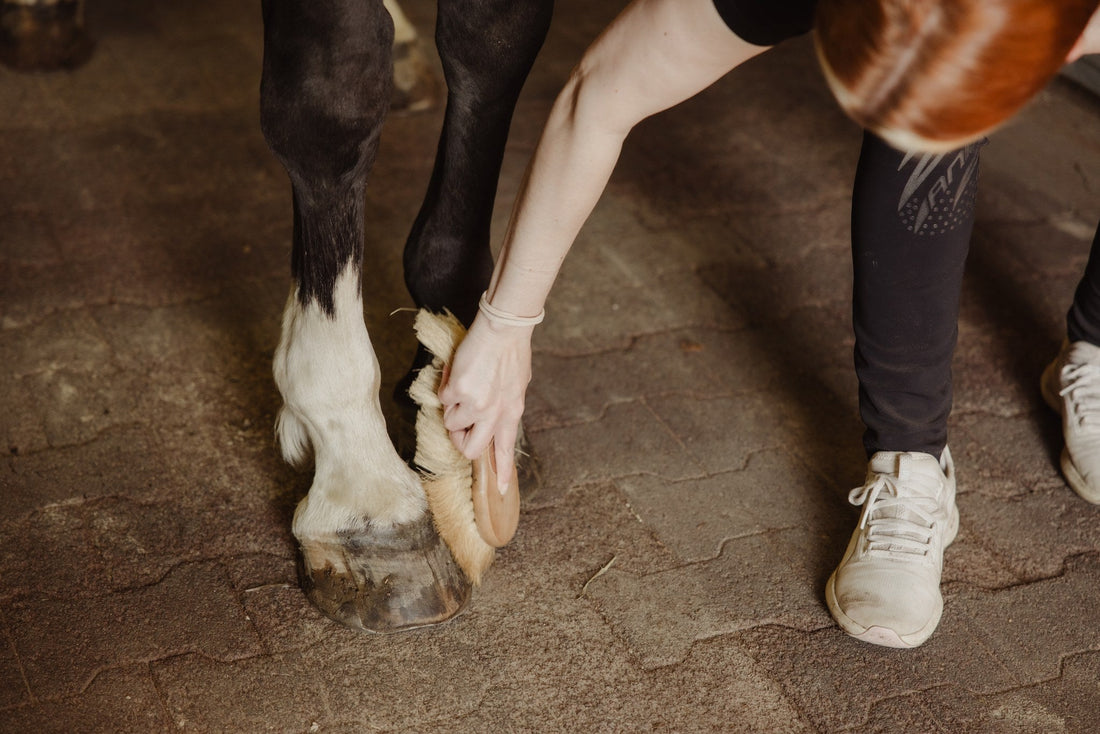
Mud fever (also called pastern dermatitis) is a common, painful skin condition in the pastern area, especially in wet and muddy seasons. The goal is to gently clean the area, keep it as dry as possible, protect irritated skin, and contact a veterinarian if symptoms are severe or not improving.
What to do
-
Check severity first: heat, swelling, lameness, pus, strong pain, fever, or rapidly spreading sores = call a vet.
-
Gently clean the area (avoid harsh scrubbing).
-
Dry thoroughly (this is key).
-
Keep the legs as dry as possible (turnout management, clean bedding).
-
Protect irritated skin and reduce rubbing/friction.
-
Monitor daily and adjust based on how the skin looks and how the horse reacts.
Recommended Woolcare products
-
Wooler Pastern Wraps (best for pastern area)
Use when the pastern skin is irritated and you want a soft, breathable layer that helps protect the area from rubbing and supports comfortable rest.
Link: https://villagepatjat.fi/en/products/wooler-pastern-wraps
-
VILLAge Wool Pads (lambswool pads) (best for larger areas / stable use)
Use as a soft wool layer when you want gentle, breathable protection and support for sensitive skin areas (for example in stable conditions).
Link: https://villagepatjat.fi/en/products/village-lampaanvillapatjat
Note: Mud fever can have different causes (bacteria/fungi/mites/skin damage). If you’re unsure, or it’s not improving, involve your veterinarian.
FAQ – Mud fever in horses
1. What is mud fever in horses?
Mud fever is an inflammation or infection of the skin around the pastern, often triggered by wet conditions and damage to the skin barrier.
2. Mud fever vs pastern dermatitis — are they the same?
“Mud fever” is a common name, while “pastern dermatitis” is a broader medical term. They are often used to describe the same condition.
3. What does mud fever look like in the early stages?
Early signs often include redness, scurf, small scabs, and sensitivity in the pastern area. Catching it early makes management much easier.
4. Can mud fever appear in summer as well?
Yes. While it is most common in wet and muddy conditions, skin damage, insects, or persistent moisture can also trigger mud fever during warmer months.
5. Is mud fever contagious between horses?
Mud fever itself is not directly contagious, but bacteria or fungi in shared muddy or wet environments can contribute to multiple horses developing symptoms.
6. Should I wash mud fever every day?
Clean the area when needed, but avoid over-washing and harsh scrubbing. Gentle cleaning followed by thorough drying is usually more important than frequent washing.
7. Why is drying so important?
Wet skin breaks down more easily and increases irritation and infection risk. Keeping the area dry supports the skin’s natural healing process.
8. Can I bandage or cover mud fever?
Sometimes protection helps, but too much heat or trapped moisture can make the condition worse. Always choose breathable materials and check the skin regularly.
9. Does mud fever come back?
Yes — especially during wet seasons. Prevention focuses on keeping the legs dry and supporting the skin barrier. Starting to use VILLAge wool pads before symptoms return can help protect sensitive skin.
10. How quickly can I see results after using wool products?
It depends on the severity and cause. Mild cases may improve quickly with good management, while deeper sores take longer and may require veterinary treatment. Many horse owners notice improvement after the first night of use.